
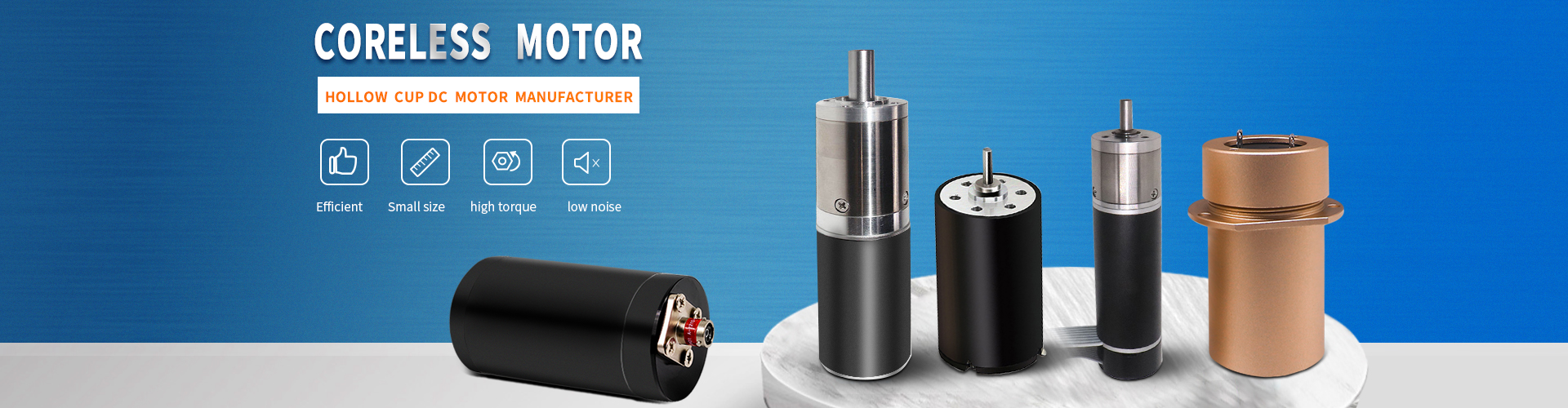
In minimally invasive surgical robotic systems, every motion from the master manipulator to the slave actuator demands extreme real‑time accuracy and responsiveness. Traditional iron‑core motors suffer from cogging torque, which causes torque ripples at low speeds and undermines the delicate “feel” required in surgical maneuvers. Moreover, their relatively high rotor inertia introduces noticeable lag, making it difficult to meet the dual requirements of haptic fidelity and fast following in complex procedures.
The coreless motor (also known as a hollow‑cup motor) offers a revolutionary solution to these challenges. Its core structure features a self‑supporting, iron‑free winding in the shape of a hollow cup, completely eliminating the ferromagnetic core. As a result, cogging torque is reduced to virtually zero, delivering exceptionally smooth torque output. This enables the motor to maintain stable rotation even at extremely low speeds (below 1 rpm), which is essential for fine adjustments in surgical end‑effectors. At the same time, the lightweight rotor cuts the moment of inertia by more than 50% compared to conventional designs, allowing the motor to accelerate from standstill to rated speed in less than 5 ms – a dynamic response that ensures virtually instantaneous command execution.
In practical applications, coreless motors have been widely integrated into force‑feedback units of master manipulators, gripper drives of needle holders, pan‑and‑tilt mechanisms of endoscopes, and micro‑drills for bone surgery. Clinical data indicate that robotic systems equipped with these motors achieve control latencies below 20 ms, while tremor filtering improves by approximately 30%, significantly reducing the risk of inadvertent tissue damage. Additionally, the use of precious‑metal brushes and commutators, combined with low inductance, minimizes sparking during commutation. This not only extends brush life to thousands of hours but also drastically lowers electromagnetic interference, ensuring reliable coexistence with sensitive monitoring equipment in operating rooms.
As new surgical paradigms such as single‑port laparoscopy and natural‑orifice transluminal surgery gain traction, the demand for ever‑smaller actuators intensifies. Coreless motors are available in outer diameters from 6 mm to 30 mm with compact axial lengths, offering high power density that frees up valuable space for miniaturized instrument design. It is clear that coreless motor technology is poised to become the indispensable “precision muscle” in next‑generation medical robotics.
Post time: Aug-21-2026