
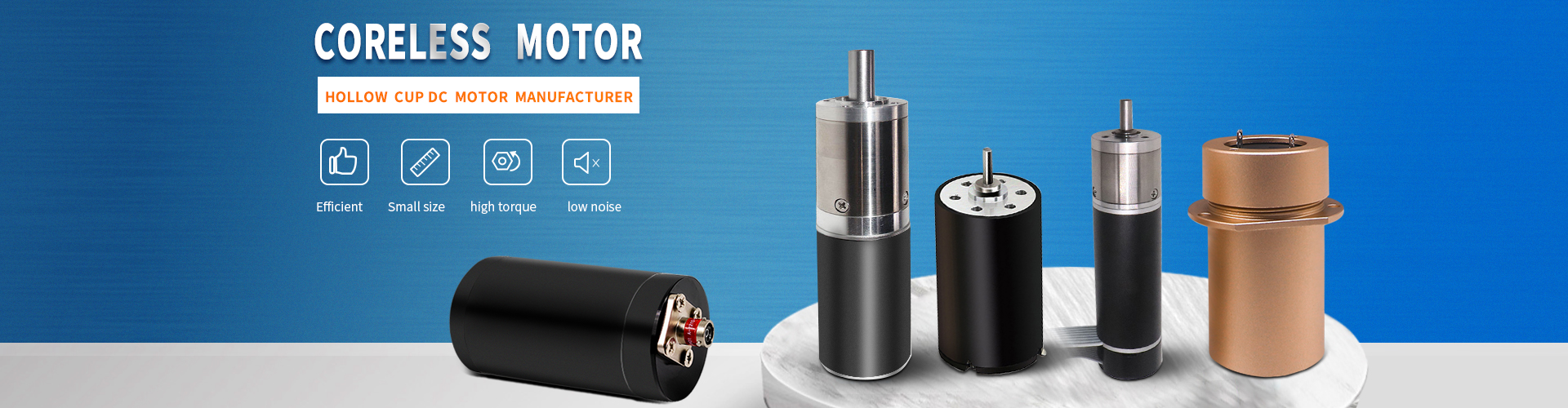
The medical device industry is experiencing a significant shift toward minimally invasive surgical techniques, and hollow cup coreless motor technology is emerging as a critical enabler of this transformation. As surgical instruments become smaller, more dexterous, and increasingly capable of performing complex procedures through tiny incisions, the demand for miniature actuation solutions that deliver precise, reliable performance has never been greater. Coreless motors, with their ironless rotor construction and exceptional power-to-weight ratio, are uniquely positioned to meet these demanding requirements.
Recent innovations in coreless motor design have focused specifically on the stringent requirements of single-use and limited-use surgical instruments. Manufacturers have developed encapsulated winding structures that withstand repeated sterilization cycles, including autoclave, ethylene oxide, and gamma radiation exposure. These advancements ensure that coreless motors maintain their performance characteristics even after multiple sterilization procedures, making them suitable for both reusable and disposable surgical tools. The development of biocompatible housing materials and specialized bearing systems further extends the applicability of these motors in direct patient-contact applications.
The emergence of robotic-assisted surgical platforms has created additional opportunities for coreless motor deployment. In these sophisticated systems, multiple coreless motors work in concert to control instrument articulation, forceps jaws, and camera positioning with sub-millimeter precision. The instantaneous response characteristics of coreless motors enable the high-bandwidth force feedback required for natural-feeling teleoperation, where surgeons rely on tactile cues to perform delicate tissue manipulation. Clinical studies have demonstrated that surgical systems utilizing coreless motor actuation achieve superior performance metrics in terms of precision, speed, and reliability compared to systems using traditional motor technologies.
Manufacturing advances have also enabled the production of coreless motors with integrated position sensors and temperature monitoring capabilities, simplifying system integration and reducing the overall component count in surgical devices. This integration not only reduces cost and assembly complexity but also improves reliability by eliminating external sensor mounting and wiring. As regulatory agencies increasingly scrutinize medical device performance, the availability of fully documented, validated coreless motor solutions has become a competitive advantage for device manufacturers.
Industry analysts project that the medical segment of the coreless motor market will experience the strongest growth through the end of the decade, driven by the increasing prevalence of robotic surgery, the shift toward outpatient procedures, and the growing demand for minimally invasive treatment options. Manufacturers who invest in application-specific coreless motor development and establish strong partnerships with medical device OEMs are well-positioned to capture significant market share in this rapidly evolving sector. The trend toward surgical robotics, in particular, is expected to accelerate as next-generation platforms receive regulatory approval and become more widely adopted in hospitals worldwide.
Furthermore, the ongoing miniaturization of coreless motors is enabling entirely new categories of medical devices, including swallowable diagnostic capsules, micro-catheter steerable tips, and implantable drug delivery pumps. These applications demand motors that are not only small but also highly reliable and capable of operating in challenging biological environments. Coreless motor technology, with its inherent efficiency and low heat generation, is uniquely suited to meet these demanding requirements, paving the way for future innovations in medical diagnostics and therapeutics.
Post time: Jul-11-2026