
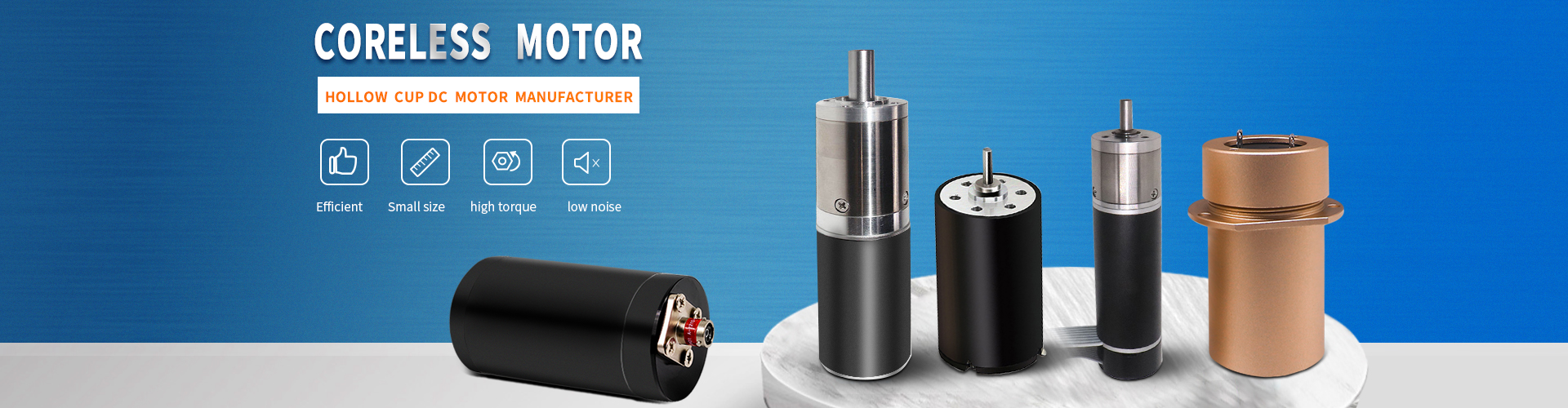
Noise pollution in hospital operating rooms and diagnostic imaging suites has long been an overlooked factor affecting surgical concentration and patient anxiety. Traditional iron-core motors generate audible magnetic cogging noise and mechanical commutation artifacts that can exceed 45 decibels under load. A new generation of coreless (hollow cup) motors featuring skew-wound, ironless armature designs has demonstrated noise reductions down to 32 decibels at equivalent torque outputs—a 30% decrease in perceived loudness.
The noise reduction stems from two fundamental design advantages. First, the absence of iron teeth eliminates cogging torque, which is a primary source of magnetic vibration and audible whining. Second, advanced winding patterns with asymmetrical coil spacing distribute electromagnetic forces more evenly, suppressing harmonics that typically radiate as high-frequency noise. Acoustic measurements conducted in anechoic chambers show that these optimized coreless motors produce a smoother, broadband sound profile rather than the discrete, irritating tones characteristic of conventional miniature motors.
For medical device manufacturers developing robotic surgical arms, powered hospital beds, and MRI-compatible infusion pumps, this acoustic improvement translates directly into quieter clinical environments. Several OEMs have already incorporated these low-noise coreless motors into their next-generation patient handling systems, with independent studies confirming reduced patient stress markers when ambient noise levels drop below 35 decibels. As hospitals increasingly pursue quiet environment certifications, the demand for acoustically optimized coreless motors is expected to rise substantially through 2028.
Post time: May-25-2026