
For millions of amputees worldwide, prosthetics have long ceased to be mere “replacements” for lost limbs—they represent the hope of returning to a normal life. Yet for decades, that hope has been compromised by the bulk, sluggishness, and rigidity of conventional prosthetic devices. That is, until coreless motors entered the picture. And at the forefront of this revolution stands Sinbad Motor, a company dedicated to pushing the boundaries of precision motion control.
Light as a Feather, Natural as a Limb
Weight is the first and most obvious challenge in prosthetic design. A natural human hand weighs approximately 400 grams. Traditional prosthetic hands, powered by conventional iron-core motors, often tip the scales at over one kilogram—and that’s before adding the structural components. Prolonged wear leads to shoulder and neck strain, while the sheer heft leaves users exhausted after just a few hours of daily use.
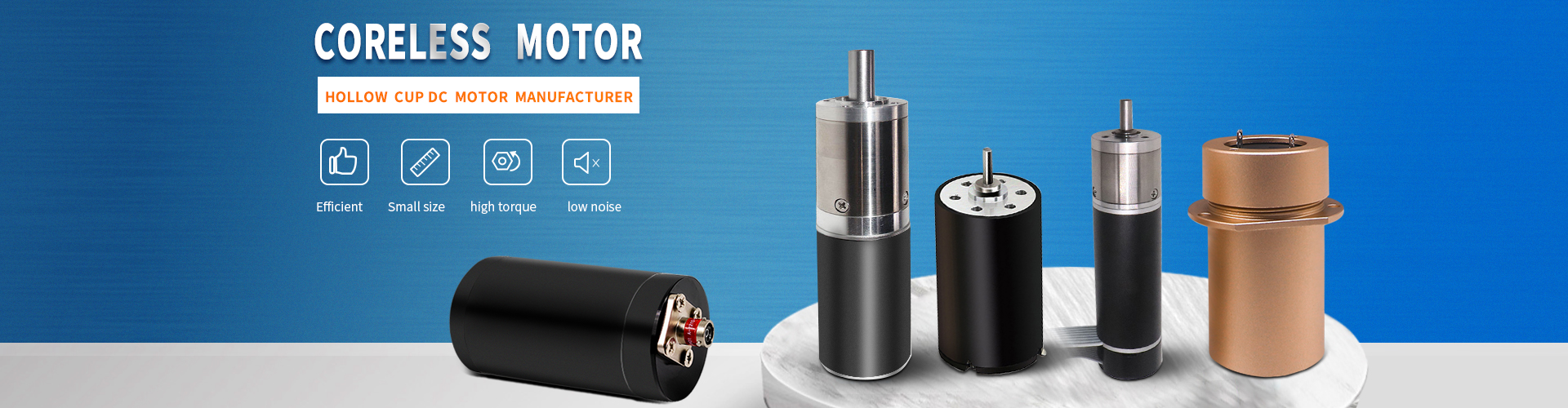
The coreless motor’s fundamental breakthrough lies in the complete elimination of the traditional iron core. Conventional motors incorporate a rotor built around laminated silicon-steel laminations—heavy, high-inertia structures that add significant mass. In contrast, a coreless motor’s rotor consists solely of a self-supporting cup-shaped winding, requiring no ferromagnetic material at all. The direct result: dramatically reduced weight and substantially lower rotational inertia.
In practical prosthetic applications, the compact brushed DC coreless motors used in finger and elbow joints have become the go-to choice precisely because of their miniature footprint and featherlight weight. One research team developed机电 actuators based on rare-earth coreless motors weighing just 0.19 kg in total—compact and light enough for clinical prosthetic deployment【0†L5-L6】.
Lightness means users can wear their prosthetics longer and move more freely.
Millisecond Response – Making “Mind Control” a Reality
Modern prosthetics are evolving from muscle-signal control toward neural-signal-driven systems. Myoelectric prosthetics detect micro-voltages from residual limb muscles to command motor actions—and this places extreme demands on response speed. If the delay between signal detection and motion execution exceeds 100 milliseconds, users will distinctly feel that the prosthetic is “out of sync” with their intention.
This is where Sinbad Motor’s coreless motors truly excel. With the iron core removed, the rotor’s mechanical time constant drops to just a few tens of milliseconds—far superior to the 100+ milliseconds typical of conventional brushed DC motors. From signal reception to the initiation of rotation, the delay is virtually imperceptible.
Even more critical: the ironless design completely eliminates cogging torque. The jarring “stuttering” sensation that plagues conventional motors at low speeds—that uneven, step-like motion—disappears entirely in coreless motors. Torque output becomes silky smooth, and operation is quiet and stable. This allows prosthetic hands to perform delicate tasks such as grasping an egg or picking up a glass with truly fluid, natural control.
Industry reports indicate that coreless motors deliver industry-leading repeat positioning and absolute positioning accuracy, capable of replicating the 0.1 mm-level fine manipulations of human fingers【0†L7-L8】. The leap from “it moves” to “it moves with precision”—that is the qualitative transformation Sinbad Motor brings to prosthetic users.
High Efficiency, Longer Battery Life – Eliminating Range Anxiety
Prosthetics are worn continuously throughout the day, and battery life directly impacts the user’s daily experience. The coreless motor’s ironless design eliminates iron losses—both hysteresis and eddy-current losses—resulting in a substantial improvement in energy conversion efficiency. While conventional brushed DC motors operate at around 50% efficiency, coreless motors consistently achieve over 80% efficiency.
Higher efficiency means either longer operating time with the same battery capacity, or a smaller battery for the same runtime—which further reduces overall device weight. It’s a virtuous cycle: lighter, more efficient, longer-lasting, better-performing.
From guiding missile flight paths to powering industrial robots and driving bionic limbs—Sinbad Motor’s coreless motors are channeling the technical superiority honed in high-end aerospace and industrial applications into tangible improvements in human quality of life. For prosthetic users, this isn’t merely a set of improved technical specifications—it’s the fundamental shift from “wearing a tool” to “possessing a limb.”
Post time: Aug-14-2026

