
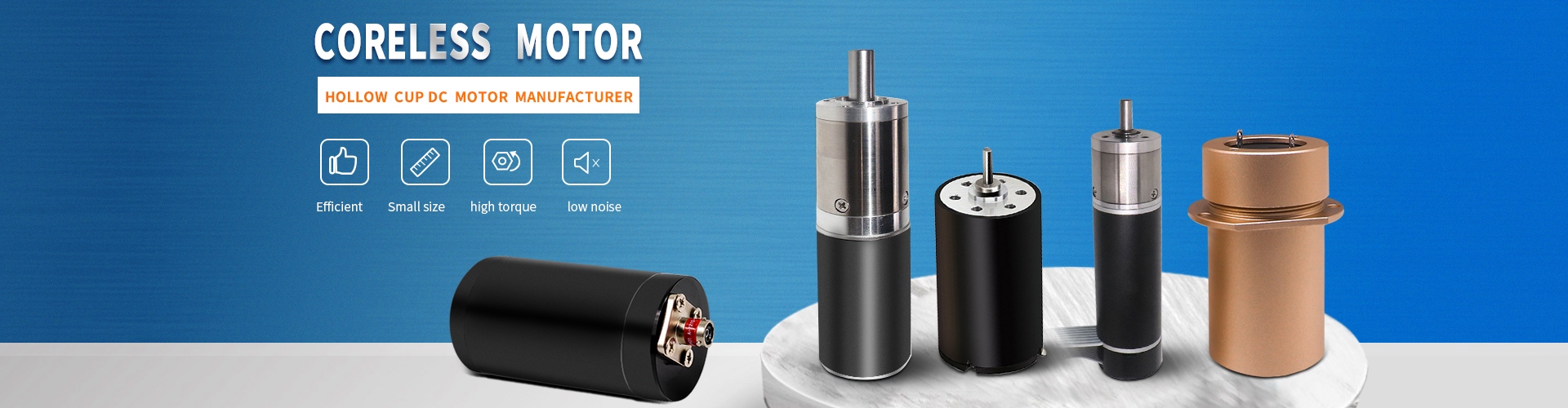
The textile industry, one of the oldest and most globally distributed manufacturing sectors, is undergoing a process of rapid modernization driven by automation, digitalization, and the demand for higher quality and efficiency. Modern textile machinery—including spinning frames, winding machines, knitting equipment, and nonwoven production lines—requires precise motion control, reliable operation, and minimal maintenance. Hollow cup coreless motors are increasingly being adopted in these applications, delivering the precision, durability, and compact form factor that modern textile manufacturing demands.

In winding and spooling machines, coreless motors provide the precise tension control necessary for consistent yarn quality. These machines must maintain uniform tension as yarn is wound onto spools at high speed, with even minor tension variations causing defects in the finished fabric. The low inertia and precise torque control of coreless motors enable rapid, accurate tension adjustments, ensuring consistent yarn quality and reducing waste. Textile machinery manufacturers report that coreless motor-driven winding systems achieve tension accuracy within ±2% of setpoint, significantly improving yarn quality and production efficiency.
Knitting and weaving equipment benefit from the smooth, vibration-free operation of coreless motors. These machines operate at high speeds, with thousands of needles or picks per minute, and even minor vibration can cause defects in the finished fabric. The absence of magnetic cogging in coreless motors eliminates a significant source of vibration, enabling higher production speeds and improved fabric quality. The compact form factor of these motors also allows for more integrated machine designs, reducing the overall footprint of textile production equipment.

Nonwoven production lines, used to manufacture materials for medical masks, hygiene products, and industrial filtration, require precise control of web tension, embossing pressure, and winding speed. Coreless motors deliver the responsive, precise control needed for these critical parameters, ensuring consistent product quality and minimizing waste. As the textile industry continues to modernize and demand higher quality, greater efficiency, and more sustainable production, the role of coreless motor technology in enabling these advancements is expected to expand significantly.
Post time: Nov-14-2026