
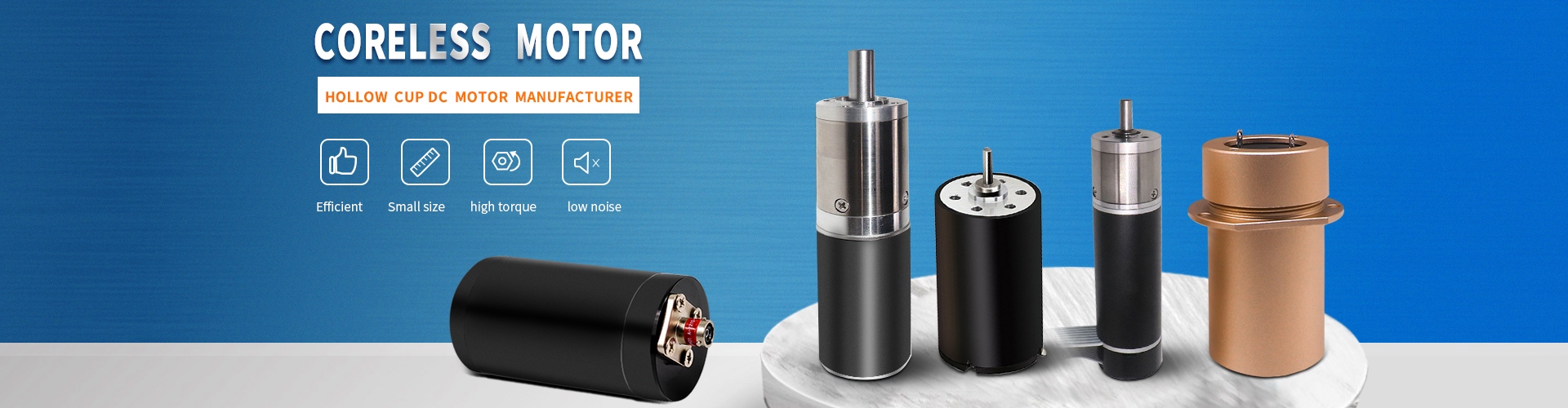
The food packaging and cold chain logistics industries operate under stringent hygiene standards and demanding environmental conditions, where equipment must deliver reliable performance while maintaining product safety and quality. From high-speed packaging lines and aseptic filling systems to refrigerated transport and automated cold storage, hollow cup coreless motors are increasingly being adopted to deliver the precision, reliability, and clean design that these applications require.
In high-speed food packaging lines, coreless motors provide the precise positioning and rapid response necessary for consistent package sealing, labeling, and cartoning. These operations must maintain accurate timing and positioning at production speeds exceeding hundreds of packages per minute, where even minor errors can cause product waste or packaging defects. The low inertia and smooth torque delivery of coreless motors enable rapid, accurate motion that conventional motors struggle to achieve at these speeds. Packaging equipment manufacturers report that coreless motor-driven systems achieve positioning accuracy within ±0.5mm at production speeds, significantly reducing waste and improving line efficiency.
Aseptic filling and sealing applications benefit from the clean design of coreless motors. These motors can be supplied with smooth, crevice-free housings that resist bacterial growth and facilitate quick washdown procedures. The absence of ventilation slots, common in conventional motor designs, eliminates potential contamination pathways. IP69K-rated coreless motor variants are available for applications requiring high-pressure, high-temperature sanitization cycles typical of dairy, beverage, and pharmaceutical filling operations.
Cold chain logistics equipment, including refrigerated transport systems and automated cold storage, requires reliable actuation in low-temperature environments. Coreless motors designed for cold chain applications are available with low-temperature lubricants, enhanced sealing, and wide-temperature insulation to ensure reliable operation at temperatures as low as -40°C. The high efficiency of these motors also reduces heat generation, which is critical in refrigerated environments where thermal management directly affects energy consumption. As food safety standards continue to tighten and cold chain networks expand, the role of coreless motor technology in enabling reliable, hygienic, and efficient operations is expected to grow substantially.
Post time: Nov-19-2026