
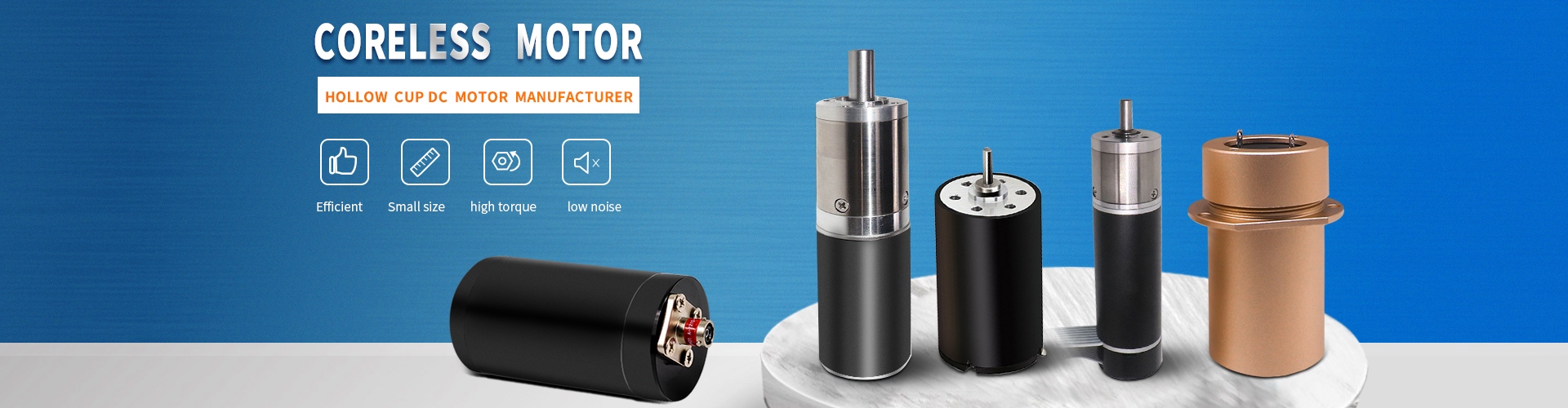
The rehabilitation robotics and powered exoskeleton market is growing rapidly, driven by aging populations, increasing rates of mobility impairment, and advances in human-machine interface technology. These systems must deliver natural-feeling assistance, precise force control, and inherent safety in direct physical contact with patients. Hollow cup coreless motors are emerging as a preferred actuation technology for exoskeleton joints and rehabilitation devices, delivering the combination of high torque density, low inertia, and smooth, quiet operation that these applications require.

In lower-limb exoskeletons used for gait rehabilitation and mobility assistance, coreless motors actuate hip, knee, and ankle joints with the precise torque control needed to synchronize with the patient’s movement. The low rotor inertia of coreless motors enables rapid response to changes in gait phase, providing assistance that feels natural rather than mechanical. The absence of magnetic cogging eliminates the torque ripple that can cause uncomfortable vibrations or jerky motion, which is particularly important when the exoskeleton is in direct contact with the patient’s body. Clinical studies report that exoskeletons equipped with coreless motor actuation achieve higher patient acceptance rates and improved therapeutic outcomes compared to systems using conventional motor technologies.
Upper-limb rehabilitation robots, including powered arm supports and hand therapy devices, benefit from the precise force control and smooth motion of coreless motors. These devices must provide assistance that is responsive to the patient’s intentions while remaining safe in the event of involuntary movement or spasticity. Coreless motors, with their linear torque characteristics and fast response, enable the high-bandwidth force control required for safe, intuitive interaction. The quiet operation of these motors also contributes to a calmer therapeutic environment, reducing patient anxiety during rehabilitation sessions.
The compact form factor and high efficiency of coreless motors enable exoskeleton designs that are lighter, more comfortable, and less obtrusive for the wearer. Reduced weight directly improves user mobility and reduces fatigue during extended use, while high efficiency extends battery runtime for untethered operation. As the rehabilitation robotics market continues to expand, driven by demographic trends and advances in assistive technology, the role of coreless motor technology in enabling safe, effective, and user-friendly systems is expected to grow substantially.
Post time: Nov-06-2026