
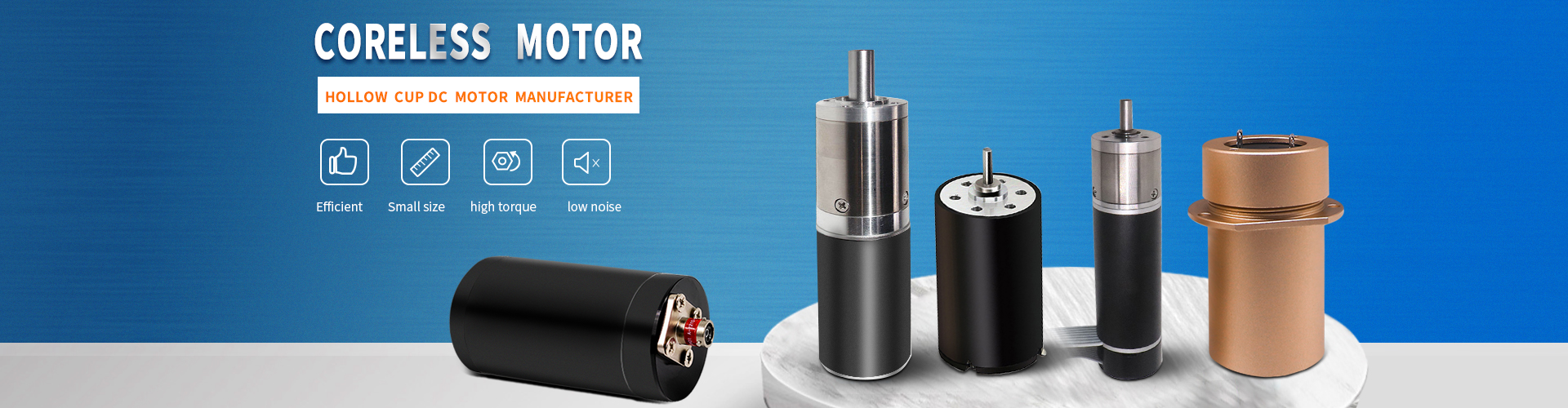
The global medical robotics industry is experiencing a paradigm shift in actuation technology as advanced hollow cup (coreless) DC motors increasingly replace conventional iron-core designs. Unlike traditional motors that suffer from magnetic cogging, coreless motors feature a self-supporting, ironless winding structure that eliminates hysteresis and eddy current losses. This fundamental design advantage enables acceleration rates up to five times higher than equivalently sized brushed DC motors, with settling times measured in sub-millisecond ranges.
For surgical robots performing delicate ophthalmic or neurosurgical procedures, this responsiveness translates directly into smoother instrument tip trajectories and reduced tissue trauma. The absence of iron cogging torque allows for exceptionally low minimum speeds—below 10 RPM—without vibration or stepping effects, making coreless motors uniquely suited for haptic feedback systems and motorized micro-forceps.
Recent clinical validation studies have demonstrated that robotic arms equipped with next-generation coreless motors exhibit 40% lower latency in force reflection compared to traditional servo systems. This improvement is critical for telesurgery applications where surgeon hand tremors must be filtered while maintaining natural haptic sensation.
Major medical device OEMs are now redesigning their actuation modules to accommodate these motors, with several announcing regulatory submissions for FDA 510(k) clearance anticipated in early 2027. As sterilization-resistant variants with fully encapsulated windings enter production, adoption across laparoscopic, catheter-based, and orthopedic robotic systems is expected to accelerate significantly. Analysts project the medical coreless motor market to grow at a compound annual growth rate of 12.4% through 2030, driven largely by the shift toward minimally invasive procedures.
Post time: Jun-05-2026