
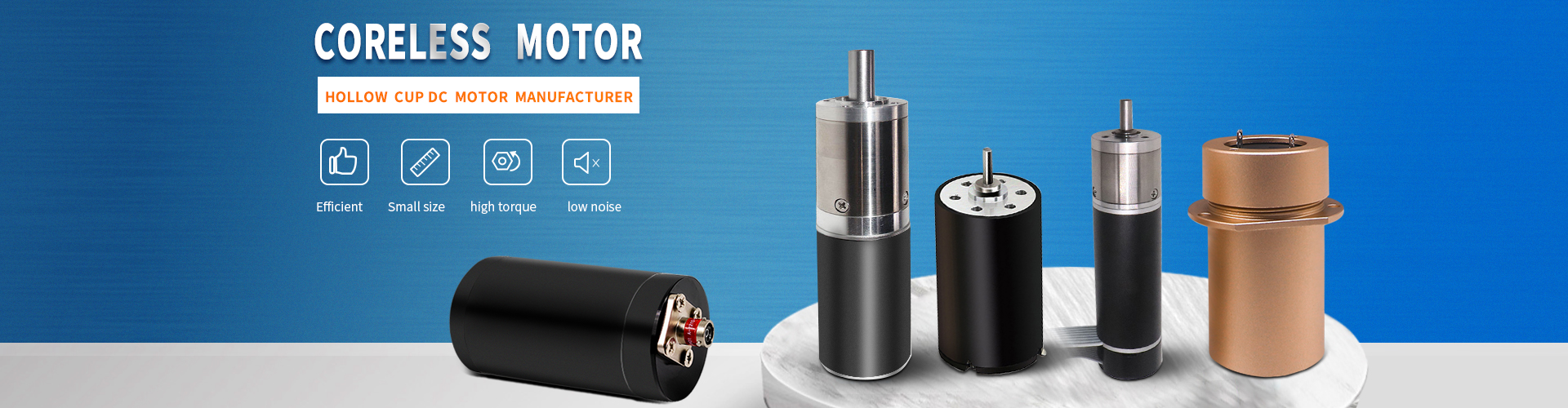
From portable oxygen concentrators and insulin pumps to industrial drones and electric grippers, modern equipment design is moving relentlessly toward “smaller, lighter, and more powerful”. Traditional iron‑core motors, limited by their structural bulk, often account for a significant portion of the device’s volume and weight. Their efficiency bottlenecks also compromise battery life, restricting mobility. The coreless motor, with its hollow‑cup winding and absence of iron, achieves a weight reduction of 30% to 40% and an axial length shrinkage of about 20% for the same output power, offering exceptional flexibility for space‑constrained designs.
In portable oxygen concentrators, coreless motors drive miniature compressors with high efficiency to concentrate oxygen. The low internal losses reduce overall energy consumption, extending battery‑powered operation by 1.5 to 2 times – a critical advantage for outdoor use or long‑distance patient transport. In insulin pumps and infusion pumps, which require frequent start‑stop cycles and precise angular positioning, the low rotor inertia enables each stepping motion to be completed within 2 ms. When paired with high‑resolution encoders, the system can achieve nanoliter‑level dosing accuracy, greatly improving the safety of drug delivery.
In industrial settings, coreless motors prove equally valuable. For drone gimbals and servo actuators, their smooth torque output ensures jitter‑free camera stabilization. In automatic screwdriving and electronic assembly pick‑and‑place mechanisms, the rapid response allows cycle rates of over 200 actions per minute with repeatability of ±0.01 mm. Moreover, the coreless structure is less prone to magnetic saturation, offering a short‑term peak torque 3 to 5 times the rated value – ideal for gripping and releasing operations that demand momentary high force.
Advancements in materials science have further expanded the performance envelope. The use of neodymium magnets and high‑temperature enameled wires allows coreless motors to operate in ambient temperatures ranging from ‑40 °C to +155 °C, making them suitable for automotive electronics, oil exploration, and other harsh environments. As global demand for compact, intelligent devices continues to surge, coreless motors are transitioning from a “nice‑to‑have” option to a “must‑have” standard, securing a technological high ground in the micro‑drive industry.
Post time: Aug-21-2026