
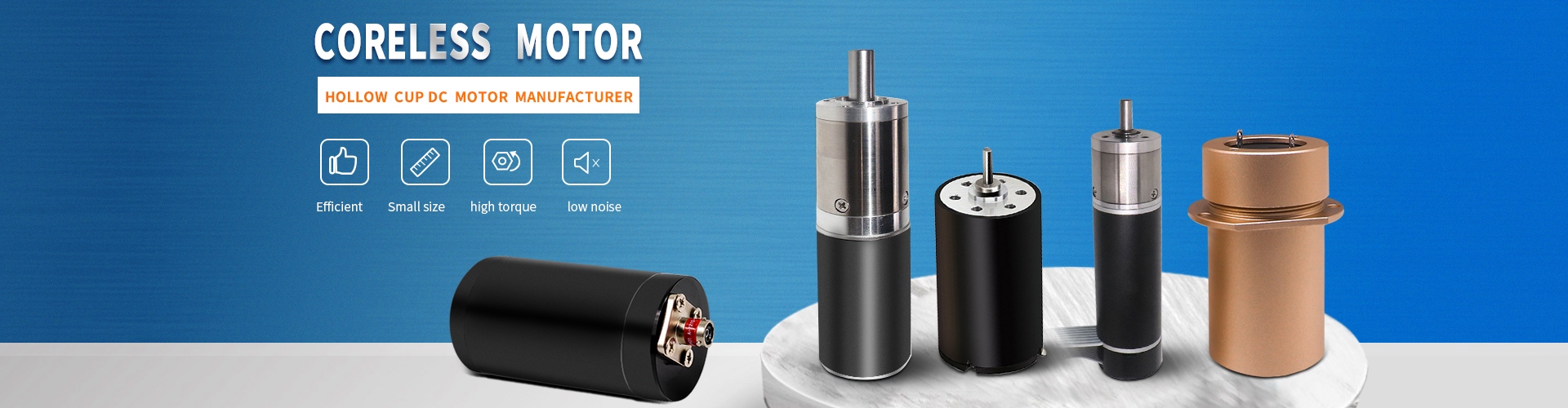

As the market for minimally invasive surgery and surgical robotics continues to expand, the demands placed on drive systems in medical devices are shifting from “functional” to “precise, stable, and miniaturized.” Against this backdrop, coreless motors are emerging as a core drive component in surgical robots, endoscopes, drug delivery pumps, and other precision medical devices, thanks to their unique structural advantages.
Compared with conventional iron-core motors, coreless motors have no iron core in the rotor, resulting in extremely low rotor inertia. This enables rapid response and exceptionally high control precision. In surgical robots, this means robotic arms can more accurately replicate a surgeon’s hand movements while reducing vibration and latency. In endoscopes and catheter systems, it means a smaller footprint and smoother motion control. For surgical scenarios requiring frequent start-stop cycles, fine adjustments, and precise force control, this low-inertia, high-response drive characteristic is particularly important.
At the same time, the slotless design of coreless motors allows them to run smoothly even at low speeds, without the cogging and jerkiness common in traditional motors. For surgical procedures that require fine manipulation, this is critical. Whether in suturing, tissue dissection, instrument articulation adjustment, catheter tip steering, or camera positioning, smooth low-speed control and low-vibration output help improve tactile feel, reduce the risk of tissue damage, and enhance overall surgical safety.
Beyond dynamic performance advantages, coreless motors also offer clear benefits in efficiency, noise, electromagnetic interference, and heat generation. Their high power density and low heat output make them better suited to medical devices that are space-constrained, temperature-sensitive, and required to operate stably over long periods. For single-use or limited-use instruments, coreless motors can also be designed with encapsulated windings, biocompatible materials, and specialized bearing systems to withstand autoclave, ethylene oxide, and gamma radiation sterilization, thereby meeting the different requirements of both reusable and disposable surgical tools.
As a coreless motor manufacturer, our focus is not only on motor performance itself, but also on helping medical device manufacturers shorten development cycles and improve overall system reliability. From miniaturized stator designs to customized gearbox, encoder, and sensor integration, we deliver not just a single component, but a complete precision drive solution. In the early stages of a project, we can work with customers to define load characteristics, speed profiles, control interfaces, lifetime requirements, and sterilization conditions, and reduce system integration risks through rapid prototyping, parameter iteration, and validation testing. In the mass production phase, we help customers improve overall product yield and long-term reliability through stable manufacturing processes, consistent quality control, and traceable management systems.
As surgical robots move toward greater miniaturization, intelligence, and precision, the application space for coreless motors will continue to grow. In the future, with the growing demand for robot-assisted surgery, outpatient procedures, and minimally invasive treatment, medical device manufacturers will need not only higher-performance motors, but also long-term partners capable of jointly participating in product definition, validation, and mass-production introduction. For medical device manufacturers, choosing a stable, customizable motor supplier with medical industry experience is becoming a key part of product competitiveness.
Post time: Nov-14-2026