
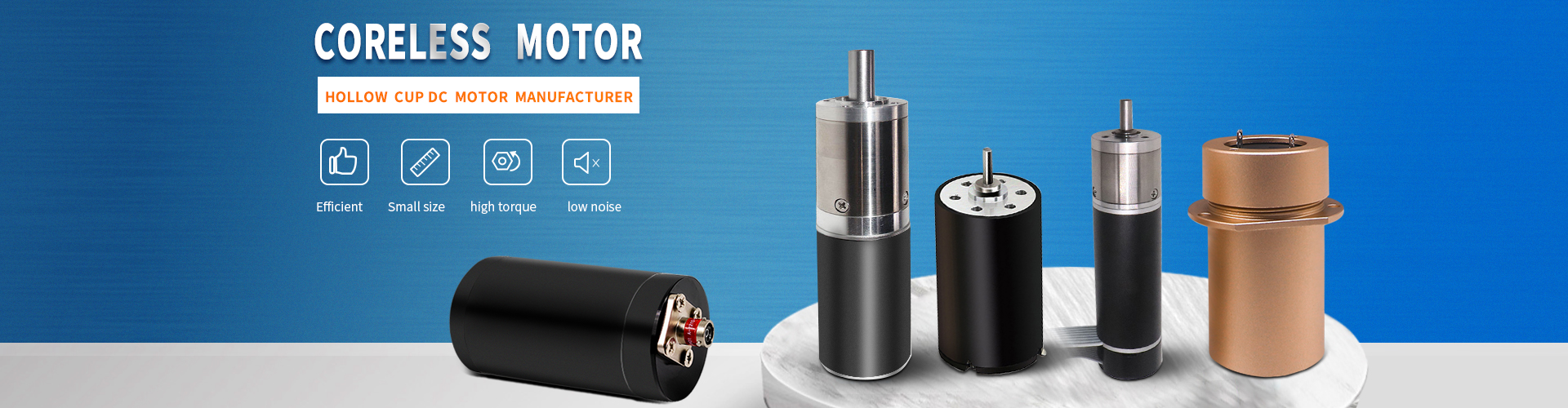
As the market for minimally invasive surgery and surgical robotics continues to expand, the demands placed on drive systems in medical devices are shifting from “functional” to “precise, stable, and miniaturized.” Against this backdrop, coreless motors are emerging as a core drive component in surgical robots, endoscopes, drug delivery pumps, and other precision medical devices, thanks to their unique structural advantages.
Compared with conventional iron-core motors, coreless motors have no iron core in the rotor, resulting in extremely low rotor inertia. This enables rapid response and exceptionally high control precision. In surgical robots, this means robotic arms can more accurately replicate a surgeon’s hand movements while reducing vibration and latency. In endoscopes and catheter systems, it means a smaller footprint and smoother motion control.
At the same time, the slotless design of coreless motors allows them to run smoothly even at low speeds, without the cogging and jerkiness common in traditional motors. For surgical procedures that require fine manipulation, this is critical.
As a coreless motor manufacturer, our focus is not only on motor performance itself, but also on helping medical device manufacturers shorten development cycles and improve overall system reliability. From miniaturized stator designs to customized gearbox and encoder integration, we deliver not just a single component, but a complete precision drive solution.
As surgical robots move toward greater miniaturization and intelligence, the application space for coreless motors will continue to grow. For medical device manufacturers, choosing a stable, customizable motor supplier with medical industry experience is becoming a key part of product competitiveness.
Post time: Sep-19-2026