
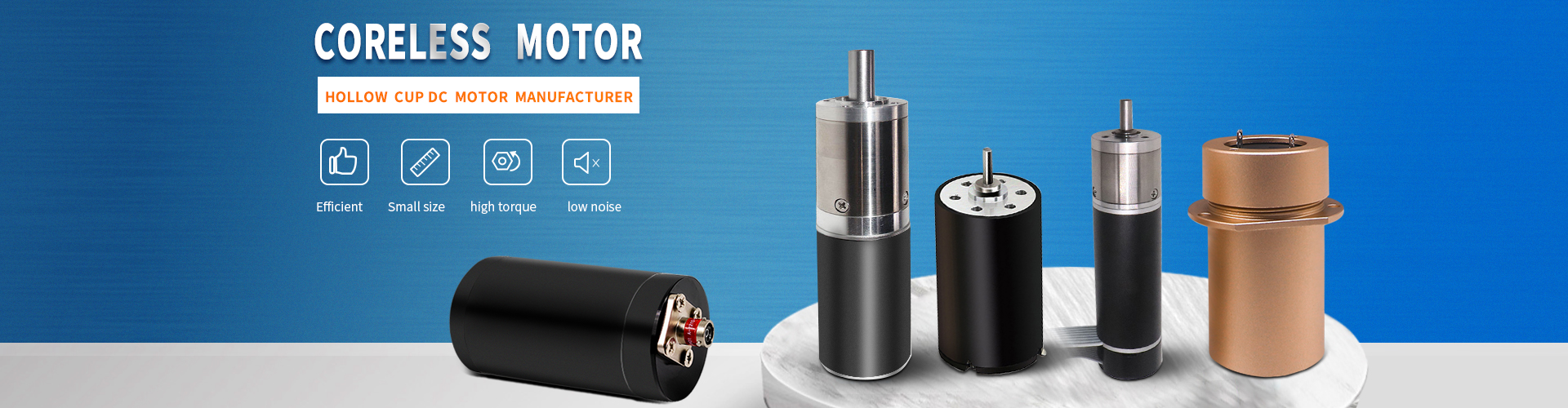
When industry professionals discuss coreless motors, prosthetics and robotics often come to mind first. But the "ironless revolution" is quietly unfolding across a much broader spectrum of medical and rehabilitation equipment—from surgical robots to artificial hearts, from ventilators to rehabilitation exoskeletons. Sinbad Motor's coreless motors are rapidly becoming the gold-standard drive solution for high-end medical devices.
Surgical Robots: Precision and Stability in Equal Measure
In minimally invasive surgery, every movement of a robotic arm carries life-or-death consequences. Surgeons operate remotely via console, controlling robotic manipulators with joystick-like interfaces—and any vibration, delay, or torque ripple can result in irreparable tissue damage.
Why have Sinbad Motor's coreless motors become the ideal choice for surgical robot end-effectors? The answer lies in their zero-cogging-torque characteristic. At low speeds—precisely where surgical robots operate—conventional iron-core motors exhibit periodic torque fluctuations caused by cogging effects, producing microscopic "jitters." In a surgical field magnified tenfold or more, these jitters can compromise suturing accuracy to an unacceptable degree. Coreless motors, by contrast, deliver inherently smooth torque output and exceptionally quiet, stable operation.
Furthermore, leading motor manufacturers—and Sinbad Motor stands alongside them—have refined ironless winding technology combined with precious-metal commutation specifically for haptic applications, enabling the motor itself to function as a highly sensitive force sensor【0†L9-L10】. This means surgical robots can not only execute commands but also perceive force—when the surgeon grips an instrument, the motor provides real-time feedback on contact force, delivering true force telepresence.
Artificial Hearts and Blood Pumps: The High-Efficiency "Core" Beating Inside the Human Body
If surgical robots represent the pinnacle of precision, then artificial hearts and blood pumps represent the ultimate test of reliability, efficiency, and biocompatibility.
Implantable blood pumps must deliver continuous, stable flow within extremely confined spaces, while placing exceptionally stringent demands on motor efficiency, heat generation, and operational lifespan. Research has demonstrated that permanent-magnet brushless DC motors based on coreless winding architectures offer significant feasibility and superiority in artificial blood pump applications.
One research team developed a coreless micromotor for blood pump use with an armature diameter of just 4.8 mm and a rotational speed of 35,000 rpm, achieving approximately 79% efficiency【0†L11-L12】. Achieving such high efficiency in such a minuscule package is made possible precisely by the ironless design, which eliminates iron losses and minimizes heat generation—critical for implantable devices, where excess heat can damage surrounding tissues.
Notably, the global coreless motor for medical market reached approximately $5.313 billion in 2025 and is projected to grow at a compound annual growth rate of 4.00%【0†L13-L14】. Behind this figure lies the medical industry's deep and growing recognition of the value delivered by coreless motor technology—and Sinbad Motor is proud to be a key contributor to this growth.
Post time: Aug-14-2026