
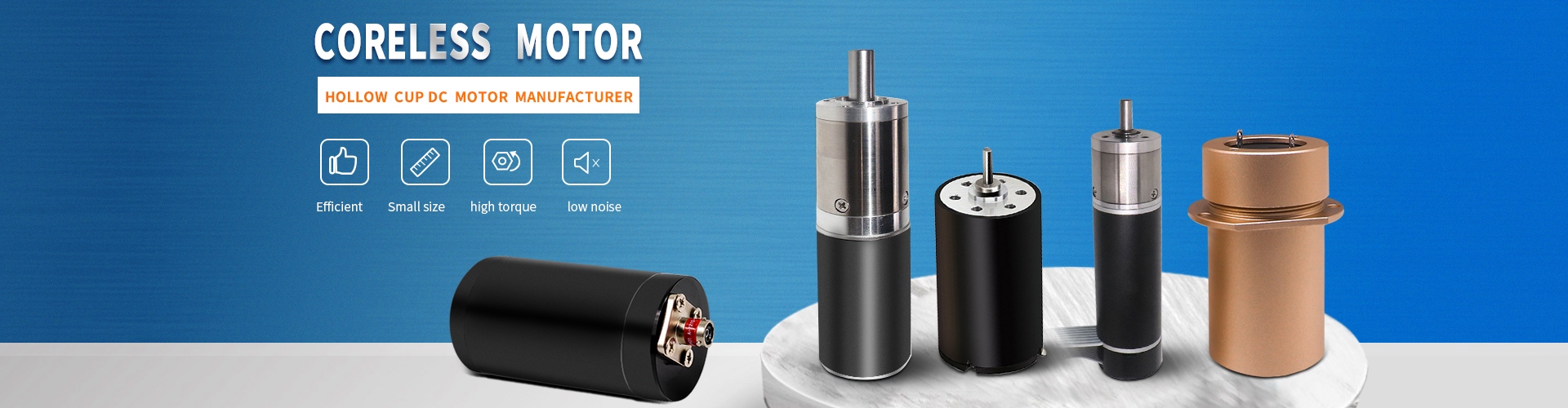
The global transition to renewable energy is driving rapid expansion of wind power capacity, with turbines growing larger and more sophisticated to capture more energy at lower cost. Modern wind turbines require precise, reliable actuation for blade pitch control, yaw alignment, and braking systems—functions that directly affect energy capture efficiency and operational safety. Hollow cup coreless motors are increasingly being adopted in these applications, delivering the precision, reliability, and efficiency that wind turbine systems demand.

In blade pitch control systems, coreless motors actuate the pitch bearings that rotate blades to optimize aerodynamic efficiency across varying wind conditions. Precise pitch control is essential for maximizing energy capture while protecting the turbine from excessive loads during high winds. Coreless motors, with their low inertia and precise positioning capability, enable rapid, accurate pitch adjustments that respond to changing wind conditions in real time. Turbine manufacturers report that coreless motor-driven pitch systems achieve positioning accuracy within ±0.1 degrees, contributing to improved energy capture and reduced mechanical stress on turbine components.

Yaw control systems, which align the turbine nacelle with the wind direction, also benefit from the precise motion control of coreless motors. These systems must operate reliably over decades of service while maintaining accurate alignment in harsh outdoor environments. Coreless motors designed for wind turbine applications are available with sealed housings, corrosion-resistant materials, and extended temperature ratings to withstand these demanding conditions. The high efficiency of these motors reduces parasitic power consumption, directly increasing the net energy output of the turbine.
Braking and safety systems in wind turbines require exceptionally reliable actuation, as failure can result in catastrophic damage. Coreless motors, with their brushless architecture and long rated lifetimes, provide the reliability that these safety-critical systems demand. The absence of mechanical brushes eliminates a common failure point and reduces maintenance requirements, which is particularly valuable in offshore installations where service access is costly and weather-dependent. As wind turbines continue to grow in size and offshore installations expand into deeper waters, the role of coreless motor technology in enabling reliable, efficient, and safe wind energy systems is expected to expand significantly.
Post time: Nov-06-2026