
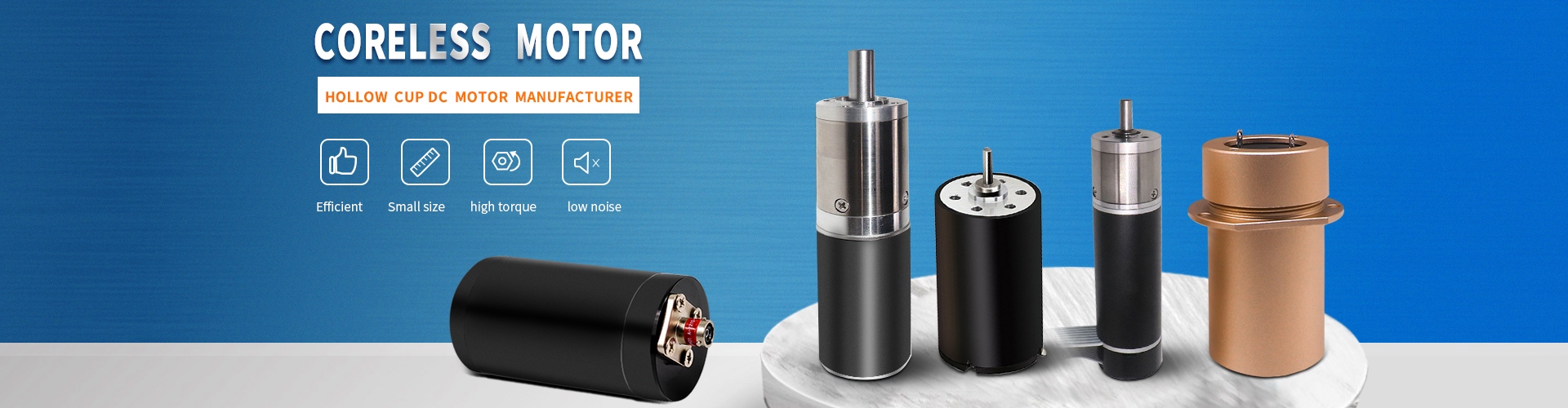
The hydrogen economy is gaining momentum as governments and industries pursue decarbonization pathways for heavy transport, industrial processes, and energy storage. Fuel cell systems, which convert hydrogen into electricity with zero carbon emissions at the point of use, require precise control of gas flow, pressure regulation, and thermal management. Hollow cup coreless motors are increasingly being adopted in fuel cell balance-of-plant systems, delivering the efficiency, reliability, and compact form factor that these demanding applications require.

In proton exchange membrane (PEM) fuel cell systems, coreless motors are deployed in hydrogen recirculation blower drives, air compressor actuators, and coolant pump mechanisms. These components must operate continuously for tens of thousands of hours while maintaining precise control of gas flow and pressure. The high efficiency of coreless motors, exceeding 85%, is particularly valuable in fuel cell systems, where parasitic power consumption directly reduces the net electrical output available for the vehicle or application. Fuel cell system integrators report that coreless motor-driven recirculation blowers achieve efficiency improvements of 8–12% compared to conventional motor technologies, contributing directly to higher system efficiency and lower hydrogen consumption.

The reliability requirements of fuel cell systems are exceptionally stringent, as these systems are expected to operate for the lifetime of the vehicle or installation—often exceeding 20,000 hours—with minimal maintenance. Coreless motors, with their brushless architecture and long rated lifetimes, provide the durability that fuel cell applications demand. The absence of mechanical brushes eliminates a common failure point and reduces the risk of particle generation, which is critical in fuel cell systems where contamination can degrade membrane performance.
Hydrogen recirculation and air supply systems also benefit from the compact form factor and low vibration of coreless motors. Fuel cell stacks are often packaged in space-constrained enclosures, and the compact size of coreless motors facilitates integration into these tight spaces. The smooth, low-vibration operation of these motors reduces mechanical stress on bearings and seals, extending the service life of the entire balance-of-plant system. As the hydrogen economy continues to expand, driven by decarbonization targets and falling renewable electricity costs, the role of coreless motor technology in enabling efficient, reliable fuel cell systems is expected to grow significantly.
Post time: Oct-31-2026