
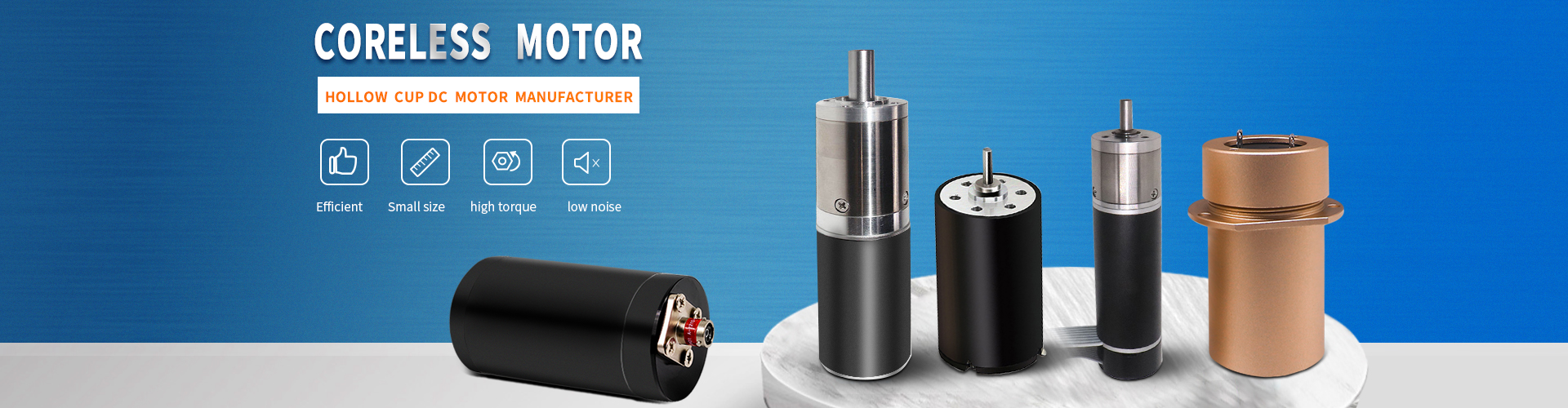
DJI’s newly released Ronin 4D‑8K cinema gimbal system employs three custom‑designed coreless stepping motors to drive its pan, tilt, and roll axes. These motors, developed in collaboration with NIDEC, are unlike conventional hybrid stepping motors that contain a slotted iron stator and permanent‑magnet rotor. The coreless variant replaces the iron stator with a printed‑circuit‑board winding that forms a thin, flat coil structure with no ferromagnetic core. This virtually eliminates magnetic detent torque – the residual holding torque that creates micro‑vibrations and audible noise in traditional steppers. On the Ronin 4D‑8K, the motors operate with a step angle of 0.9° (400 steps per revolution), but the built‑in micro‑stepping driver interpolates to 256 micro‑steps per full step, achieving a theoretical resolution of 0.0035° per micro‑step. In practical use, this allows the gimbal to compensate for hand tremors and walking vibrations at frequencies up to 200 Hz with a latency of only 2 milliseconds, ensuring that a 8K cinema camera weighing 4.5 kg stays perfectly level and pointed at the subject even when the operator runs or climbs stairs.
The coreless stepping design also drastically reduces audible noise – measurements taken in an anechoic chamber show the gimbal produces only 22 dB(A) at 1 meter during dynamic balancing, which is quieter than a whispering voice. This is crucial for film sets where dialogue and ambient sound are recorded with shotgun microphones; any motor whine would ruin the audio track. Furthermore, the motors draw just 150 mA per axis at 12 V during active stabilization, allowing the entire gimbal to run for 8 continuous hours on a single Sony NP‑F970 battery pack. The low power consumption stems from the absence of iron losses and the high efficiency of the PCB winding, which achieves a copper fill factor of over 75% compared to around 50% in conventional wound stators. The outer diameter of each motor is only 28 mm, and the axial length is 20 mm, making them compact enough to fit inside the slim gimbal arms while leaving space for a large‑diameter cooling fan that keeps the camera sensor from overheating during long takes.
Professional cinematographers who tested the system on a 45‑day documentary shoot in the Amazon rainforest reported that the gimbal maintained stable tracking of fast‑moving subjects like monkeys swinging through trees and boats navigating rapids, without any focus hunting or micro‑jitter. The coreless motors’ low inertia also means they can reverse direction instantaneously – from full‑speed clockwise to full‑speed counter‑clockwise in under 10 milliseconds – which is essential for following erratic action sequences. DJI’s software team tuned the motor’s current loop to exploit the linear torque‑current relationship of the coreless design, resulting in a smooth acceleration curve that eliminates the “steps” felt in older gimbal systems. The gimbal also features a “sleep” mode where the motors are de‑energized, yet the zero‑cogging characteristic ensures that when power is restored, the gimbal resumes its exact position without any “jump” – a common nuisance with iron‑core steppers that have strong detent positions. This reliability has made the Ronin 4D‑8K the preferred choice for live broadcast events and high‑end commercial shoots, where any unexpected movement or noise could ruin a multi‑million‑dollar production.
Post time: Aug-08-2026