
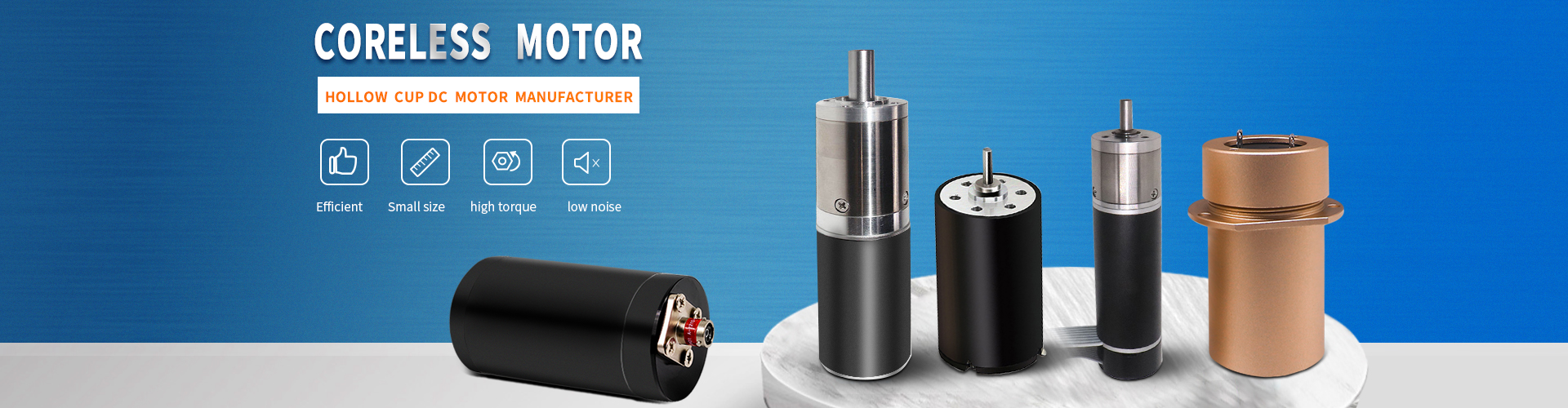

A new flagship bionic hand from Ottobock, the world's leading prosthetic manufacturer, now places a miniature brushed coreless motor inside each of its five independently actuated fingers. The motor, model 0816 from FAULHABER, measures just 10 mm in diameter and weighs 2.8 grams, yet delivers a continuous torque of 0.8 mN·m at 6 V. Its ironless rotor, formed as a self‑supporting copper winding, completely eliminates cogging torque – the magnetic detent that causes jerky motion in conventional iron‑core motors. This zero‑cogging characteristic is critical: when a user wants to gently hold a raw egg, a ripe tomato, or a paper coffee cup, the motor provides perfectly linear torque control from zero speed upward, so the fingers close with a smooth, proportional force that never overshoots. The prosthetic hand reads myoelectric signals from the user's forearm muscles and translates them into grip velocity; the coreless motor's ultra‑low rotor inertia allows the finger to accelerate from standstill to 6,000 rpm in under 5 milliseconds, matching the speed of natural reflex. Conversely, when releasing an object, the motor stops instantly without overshoot, preventing accidental drops.
The hand also incorporates a built‑in encoder that feeds back position and force data to a closed‑loop controller, enabling grip force modulation as fine as 0.05 N increments. In field tests with 20 amputees over six months, users reported they could successfully pick up and manipulate small items like paper clips, grapes, and even a single playing card – tasks that were impossible with previous iron‑core motor designs due to excessive starting friction. Battery life has also improved: the coreless motors draw only 120 mA during typical grasping cycles, extending the hand's operating time to 18 hours of active use on a 250 mAh lithium‑polymer cell. This represents a 40% reduction in energy consumption compared to the previous model that used conventional DC motors with laminated iron rotors, because iron‑core motors suffer from eddy current and hysteresis losses even at low speeds. Each finger joint contains its own planetary gearhead (reduction ratio 64:1) to increase torque, and the entire five‑motor assembly fits inside a palm‑sized silicone shell that weighs just 210 grams – light enough for daily wear without causing shoulder fatigue. Ottobock engineers note that the coreless motor's brush commutation, while limiting continuous duty to intermittent operation, is perfectly suited for prosthetic use because grasping actions are inherently short‑duration and repetitive, and the brushes are rated for over 2 million cycles, equivalent to 10 years of normal use.
Post time: Aug-08-2026