
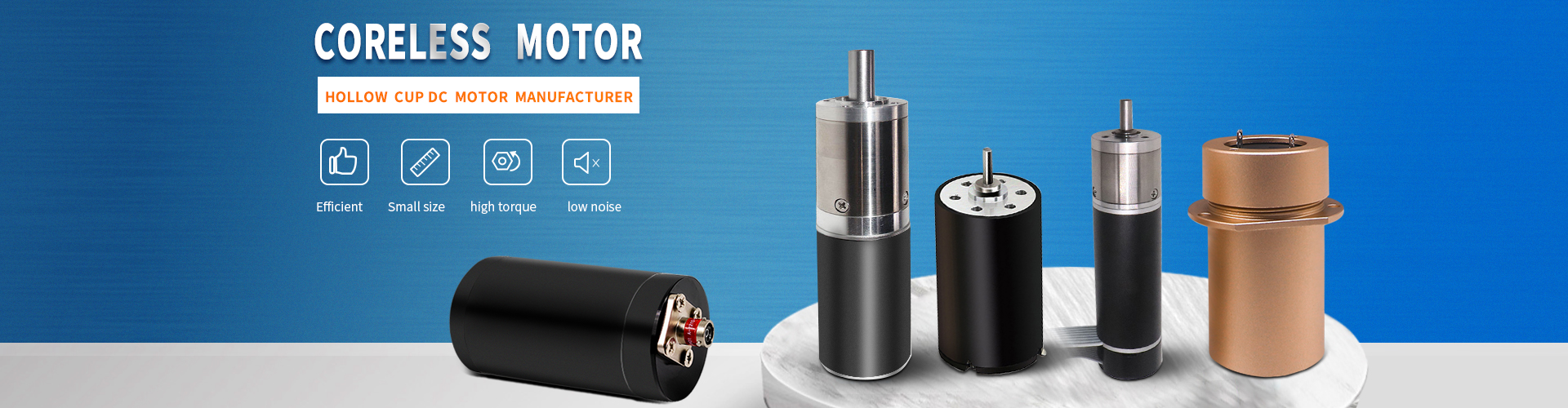
The automotive industry’s rapid transition toward electric vehicles has created unprecedented demand for efficient, compact, and reliable thermal management systems. Battery cooling, power electronics temperature regulation, and cabin climate control all require precise actuation of coolant valves, active grille shutters, and blower fans. Hollow cup coreless motors are emerging as a preferred solution for these applications, offering the combination of low inertia, high efficiency, and quiet operation that automotive engineers require.

In electric vehicle battery thermal management systems, coreless motors are being deployed to control multi-way coolant valves that direct fluid flow between battery packs, power electronics, and radiators. The zero-cogging characteristic of coreless motors allows for smooth, precise valve positioning even at low speeds, ensuring optimal thermal distribution under varying load conditions. Engineers report that coreless motor-driven valves achieve positioning accuracy within ±0.5% of full scale, significantly improving thermal management system efficiency.

The energy efficiency of coreless motors is particularly valuable in electric vehicles, where every watt-hour of battery capacity directly impacts driving range. With efficiencies exceeding 85%, these motors consume less power than traditional iron-core alternatives, contributing to extended vehicle range. The compact form factor also facilitates integration into space-constrained underhood environments where multiple actuators must operate in close proximity.
Quiet operation is another critical advantage for automotive applications. Coreless motors generate significantly less acoustic noise than conventional designs due to the absence of magnetic cogging. This characteristic is especially valued in electric vehicles, where the absence of internal combustion engine noise makes any additional sound from actuators and fans more noticeable to passengers. Manufacturers report that vehicles equipped with coreless motor-driven HVAC and thermal management systems achieve cabin noise levels up to 3 dB lower than those using conventional motor technologies.
Looking ahead, the adoption of coreless motor technology in automotive applications is expected to accelerate as vehicle manufacturers continue to pursue efficiency improvements and enhanced passenger comfort. The development of automotive-grade coreless motors with extended temperature ranges and enhanced vibration resistance is opening new applications in electric power steering, brake-by-wire systems, and active suspension components.
Post time: Aug-08-2026