

2025 is widely regarded as the production‑ramp year for humanoid robots. Tesla plans to produce 10,000 units of its Optimus robot annually, while Chinese firms like Zhiyuan Robot are also accelerating commercialisation. Amid this wave, the dexterous hand – the core end‑effector for fine manipulation – has become a key battleground in the supply chain. The critical component driving its multi‑DOF, high‑precision movements – the coreless motor – is evolving from a "nice‑to‑have" to a "must‑have" standard.
Dexterous Hand Demands Drive Motor Technology Upgrades
A dexterous hand must simultaneously achieve motion capability, load capacity, control precision, perception, durability, and lightweight design. A single hand often integrates dozens of micro‑motors to drive the flexion, extension, and grasping of each finger joint. Industry estimates suggest that the demand for coreless motors in humanoid dexterous hands alone will reach approximately 13.93 million units, corresponding to a market size of about RMB 8.9 billion.
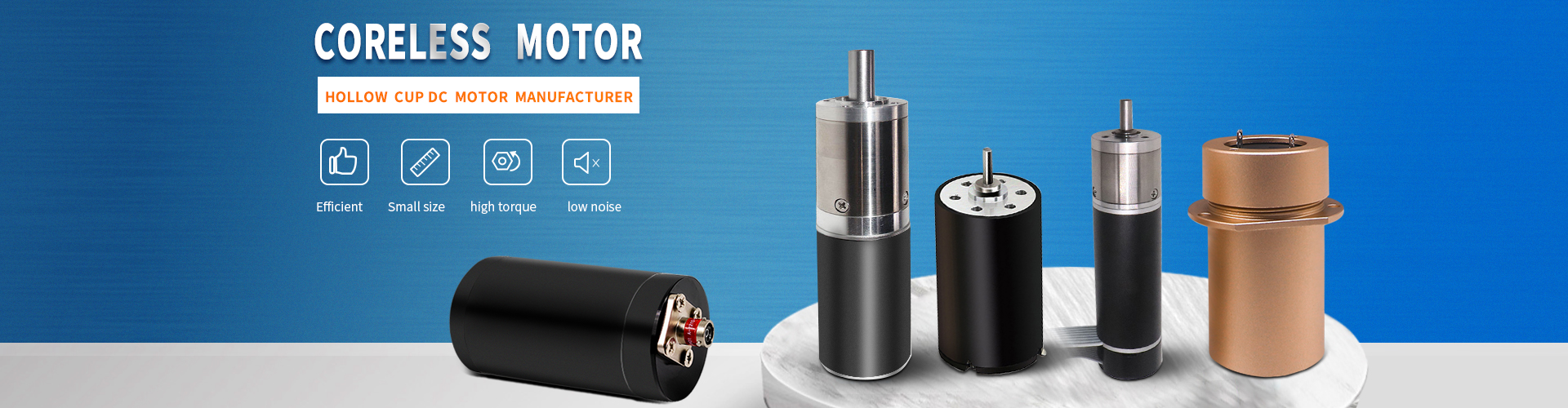
Traditional iron‑core motors suffer from inherent drawbacks such as cogging torque, high rotor inertia, and sluggish response, making them inadequate for the "instant start‑stop, pinpoint positioning, and miniature footprint" required by dexterous hands. The coreless motor, by completely eliminating the iron core and adopting a self‑supporting cup‑shaped winding, fundamentally eliminates cogging, achieving zero cogging torque, ultra‑low rotor inertia, and millisecond‑level dynamic response.
Major Manufacturers Accelerate Coreless Motor Portfolios
In April 2026, China‑based Yifan Motor unveiled its next‑generation high‑performance coreless DC motor series at Automate 2026 in Chicago, specifically designed for the stringent demands of robotics and medical automation. The series offers 16mm and 22mm frame sizes. The 16mm version delivers a rated speed of 45,360 rpm, ideal for compact prosthetic fingers; the 22mm version provides a rated torque of 11 mN·m, suitable for surgical robot end‑effectors and other high‑end applications.
A Yifan Motor spokesperson stated that the new coreless design reduces rotor inertia, improves efficiency, and enhances dynamic response. In grasping actions, the low‑inertia design enables instant start‑stop capability – a critical requirement for precise bionic gripping.
Meanwhile, international giants such as maxon (Switzerland), Faulhaber (Germany), and Nidec (Japan) continue to invest heavily in coreless motor technology. maxon’s portfolio is almost exclusively focused on coreless architectures, widely used in humanoid, service, and surgical robots. CITIZEN MICRO’s high‑torque coreless micro‑motors are also extensively deployed in robotics and medical equipment.
Emerging Trend: "Forearm‑Concentrated Drive + Tendon Transmission"
Notably, next‑generation humanoid robots like Tesla’s Optimus V3 (2026) are adopting a "forearm‑concentrated drive + tendon transmission" scheme, where motors are packed into the forearm and power is transmitted via tendons to the finger joints. This approach dramatically increases the demand for high‑end coreless motors and micro‑servo drives – the limited forearm space requires more motors with higher power density, while also demanding better thermal management, lower noise, and extended lifetime.
Coreless motors, with energy conversion efficiency exceeding 90%, excellent heat dissipation, and long service life, have become the preferred power source for this new architecture. Industry observers predict that as humanoid robots move from labs to mass production, the coreless motor market will experience explosive growth, reaching an estimated USD 1.614 billion globally by 2032, at a CAGR of 8.9%.
Post time: Jul-25-2026