
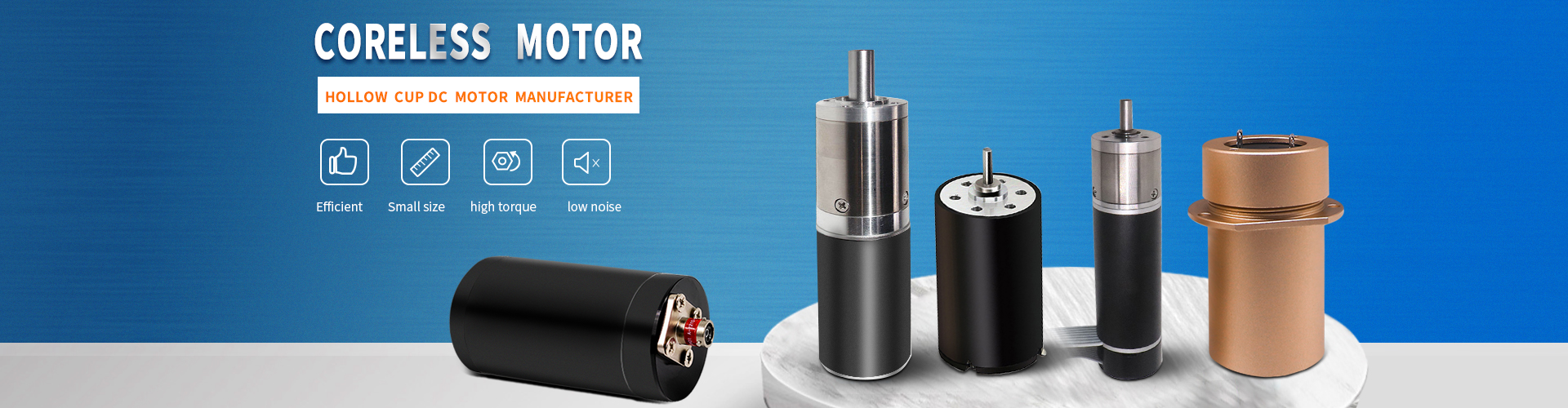
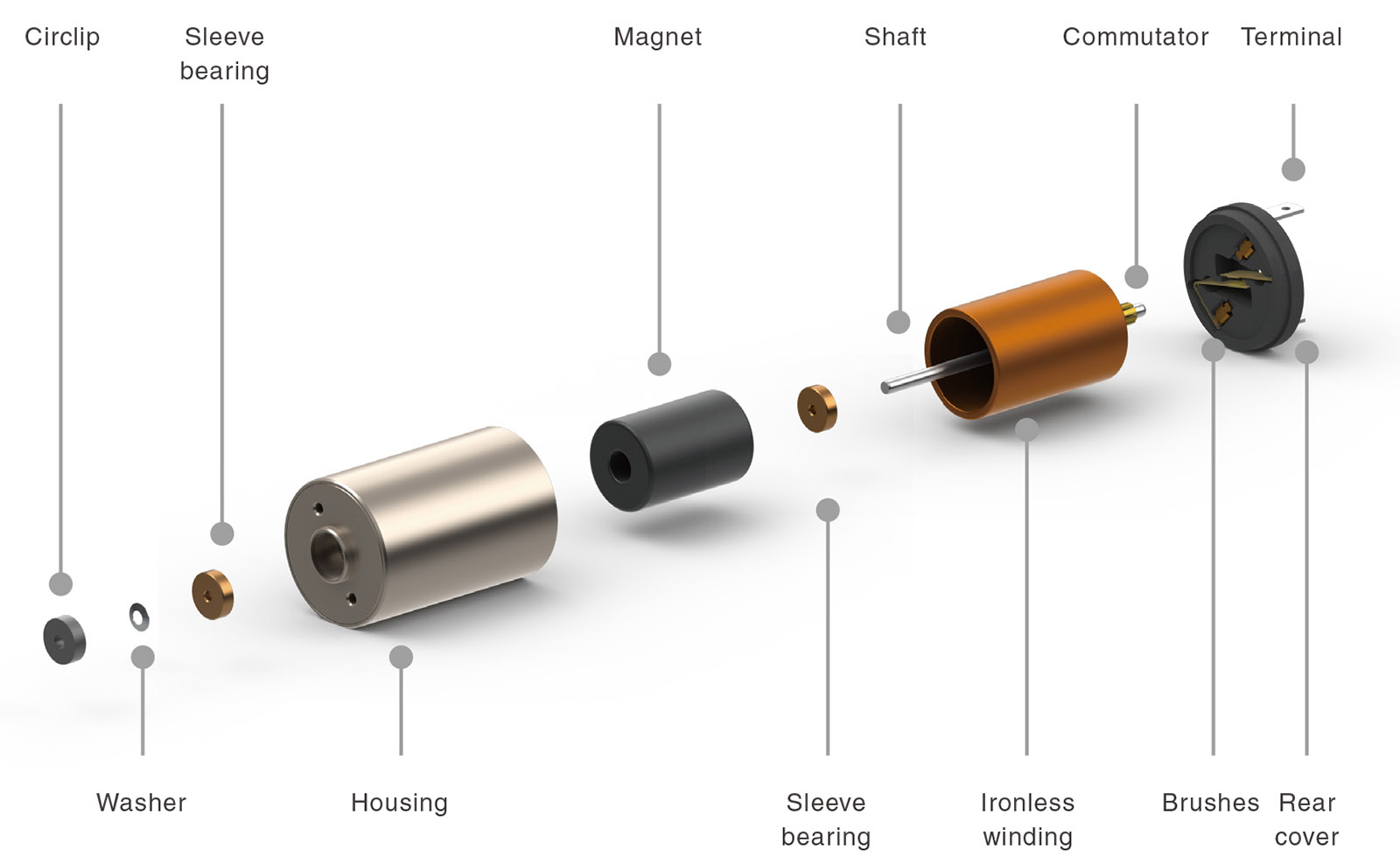
In the trend toward miniaturisation and precision in medical devices, drive system performance has become a key determinant of clinical outcomes. From surgical robots to insulin pumps, endoscopes to dental handpieces, coreless motors – with their zero cogging, low noise, and high power density – are becoming the standard power solution for premium medical equipment.
Surgical Robots: The "Invisible Hand" Behind Micrometre Precision
Surgical robots demand extreme performance from their drive motors – they must deliver stable torque within a tiny package, while achieving completely smooth, jitter‑free motion. Traditional iron‑core motors, due to cogging torque, produce noticeable "step‑like" sensation at low speeds – unacceptable for sub‑millimetre surgical accuracy.
By removing the iron core and using a self‑supporting winding, coreless motors eliminate cogging torque entirely, enabling smooth operation from ultra‑low to ultra‑high speeds. In surgical robots, coreless motors are widely applied in joint actuation, micro‑instrument forceps, and small‑joint drives for endoscopic tools.
Industry data show that coreless motors have about one‑third the rotor inertia of conventional motors, with mechanical time constants as low as 10 ms, supporting instant start‑stop and rapid load‑response. This is particularly crucial in robotic surgery – when the surgeon manipulates the console for fine dissection or suturing, the motor must provide instantaneous, accurate follow‑up.
Minimally Invasive & Portable Devices: Small Footprint, Big Output
In minimally invasive surgery, orthopaedic tools, arthroscopic shavers, ENT micro‑instruments, and high‑speed neurosurgical drills require both high power density and tolerance to sterilisation. The coreless motor’s high power density enables it to output far more power than traditional motors of the same volume.
In dental handpieces, coreless motors offer low noise, high speed, and autoclavability, making them an ideal choice. In infusion pumps and insulin pumps, their low vibration, low noise, and low power consumption improve patient comfort and significantly extend battery life for portable devices.
From "Optional" to "Standard": Data Confirms Trend
According to QYResearch, the global coreless DC motor market was valued at approximately USD 931 million in 2025 and is projected to reach USD 1.581 billion by 2032, with medical devices being one of the fastest‑growing end‑use segments.
In precision medical imaging, coreless motors are widely used in galvanometer scanning systems – whether for medical aesthetic lasers or ophthalmic imaging, the excellent linearity and low hysteresis of coreless motors ensure stable beam positioning and repeatable high‑quality imaging.
Yifan Motor’s 22mm coreless DC motor, showcased at Automate 2026, offers rated torque of 11 mN·m and rated speed of 37,000 rpm, tailored for surgical robot end‑effectors and high‑speed medical pumps. The company said the product line has passed internal validation and is now being delivered to customers, marking a significant step in its strategic push into premium medical markets.
Industry experts note that with the continued proliferation of minimally invasive surgery, robot‑assisted procedures, and portable medical devices, the penetration of coreless motors in healthcare will further increase. In a market where size, noise, and response time define product competitiveness, coreless motors are transforming from a "technical option" into a "competitive moat".
Post time: Jul-25-2026